
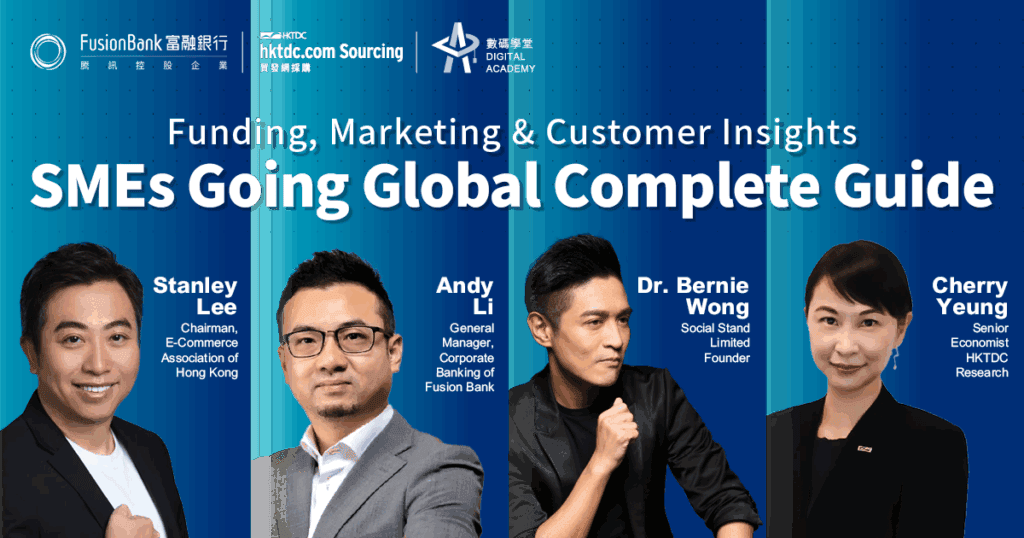
On 15 October 2025, I joined the Hong Kong Trade Development Council’s Digital Academy seminar on funding, marketing and customer insights for small and medium-sized enterprises going global. Held during the Hong Kong Electronics Fair (Autumn Edition), the hybrid session helped Hong Kong and Mainland Chinese SMEs connect market research, cross-border e-commerce, 數碼營銷, AI and financing into one practical expansion plan.
Choosing the right market, story and tools
My session introduced three core pillars for cross-border e-commerce: choose the right market, tell the right story and use the right tools. These decisions need to reinforce one another. A business should not select a platform or generate content before understanding where demand exists and what buyers in that market value.
Europe, the United States and Southeast Asia require different approaches
Mature European and American markets reward detailed information, credible brand stories, social responsibility and trust. Buyers often conduct extensive comparisons before purchasing, so depth and evidence matter.
Southeast Asia offers strong growth potential for SMEs, but success depends on local behaviour. Social proof, livestream shopping, influencer marketing and platforms such as TikTok Shop play a larger role, while local payment tools including GoPay in Indonesia and MoMo in Vietnam reduce friction at checkout.
AI can help teams research markets, adapt messages and accelerate content creation. It works best when guided by clear positioning and real customer insight—the same approach used in my AI and digital marketing training.
Funding and market intelligence must support the marketing plan
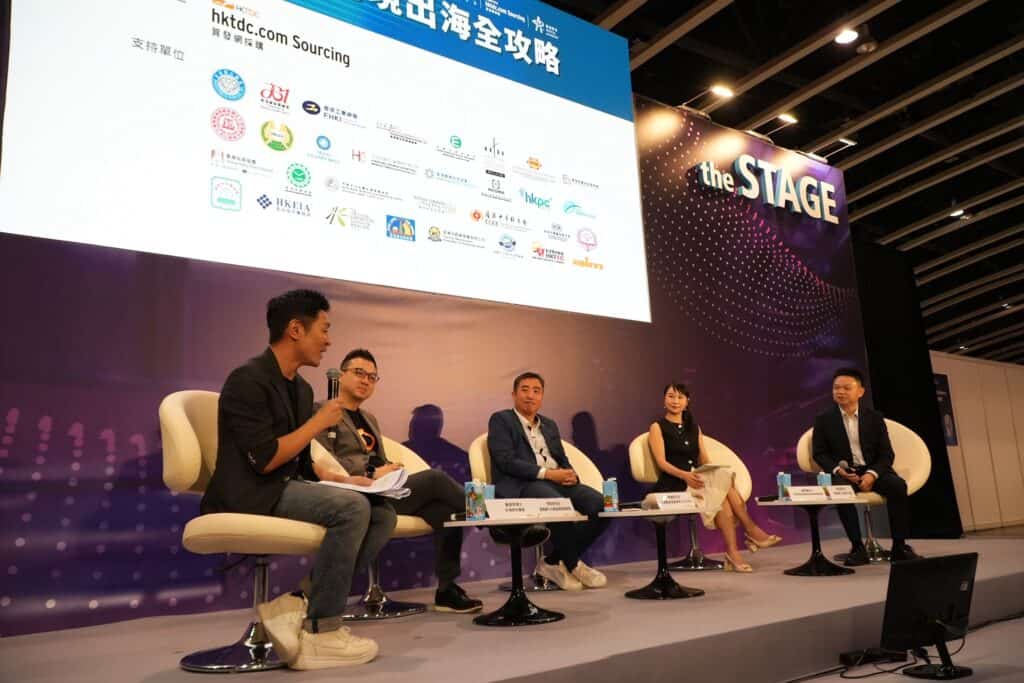
Andy Li, General Manager of Corporate Banking at Fusion Bank, explained common financing and cross-border payment challenges. The panel also included Stanley Lee, Chairman of the E-Commerce Association of Hong Kong; Cherry Yeung, Senior Economist at HKTDC Research; and King He of Hoodisk Electronics.
Practical lessons for an SME go-global strategy
- Prioritise markets using evidence. Compare demand, competition, regulation, payment behaviour and routes to market.
- Localise the customer journey. Translation alone is not enough; adapt proof, platforms, formats and calls to action.
- Build trust through storytelling. Explain the origin, purpose and customer value behind the product.
- Use AI with clear brand guardrails. Create faster without losing accuracy, relevance or a distinctive voice.
- Plan financing and cash flow early. Marketing growth can strain operations if payment and funding arrangements are not ready.
Event details
- Event: HKTDC Digital Academy — SME Cross-Border Expansion Seminar
- Date: 15 October 2025
- Time: 4:00–5:30 pm
- Venue: The Stage, Hong Kong Electronics Fair (Autumn Edition), Hong Kong Convention and Exhibition Centre
- Format: In person and livestream
- Languages: Cantonese and Putonghua
常見問題
What is a go-global strategy for an SME?
It is a coordinated plan covering market selection, positioning, localisation, customer acquisition, operations, financing and measurement for expansion outside the home market.
How can AI support cross-border e-commerce?
AI can accelerate market research, customer analysis, translation, content adaptation, campaign testing and monitoring. Human review remains essential for accuracy and cultural relevance.
Can Dr Bernie Wong deliver a customised SME training programme?
Yes. Explore corporate training services or use the contact page to discuss a workshop, seminar or keynote on AI, digital marketing, storytelling or cross-border growth.
Source: HKTDC NewsBites seminar recap and official event information.